
The Hidden Cost of Disconnected Event Data

The Numbers Don’t Match — And Everyone Knows It

You pull the registration report: 2,847 attendees.
Housing says: 2,611.
On-site scans show something else entirely.

Now someone from finance is asking which number is “correct,” marketing needs engagement metrics for leadership, and your sponsor team is waiting on performance reports that don’t reconcile.

At that moment, the issue isn’t reporting.
It’s infrastructure.

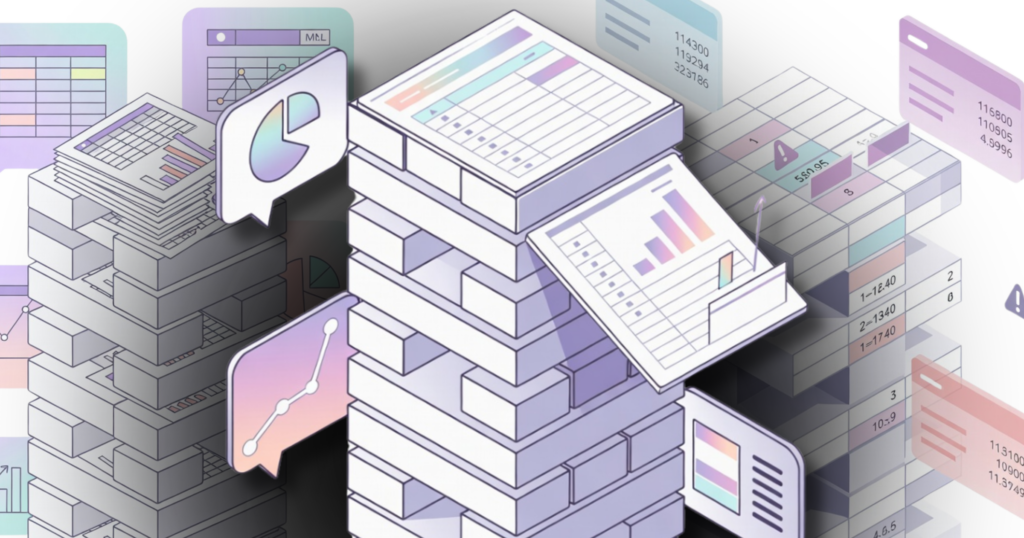
Corporate event data governance illustrated through centralized data layers

Event Data Is Still Treated Like a Post-Event Task

Most organizations build incredible event experiences — and then try to stitch the data together afterward.

Registration lives in one system.
Housing in another.
Session attendance somewhere else.
Sponsor leads in a spreadsheet that gets emailed around.

That approach worked when events were smaller and expectations were lower.
It doesn’t work when leadership expects measurable outcomes.

The Real Cost of a Disconnected Tech Stack

Fragmented data isn’t just an inconvenience; it’s a liability. It creates risks that ripple across the entire program:
 
Financial Risk: Inaccurate counts drive F&B overages, labor misalignment, and unused room blocks. Every dollar wasted is a dollar that can’t be reinvested into the attendee experience.
 
Operational Risk: Badge errors, duplicate records, and last-minute manual fixes slow down on-site execution. The result is a chaotic check-in experience and a team that spends its time fighting fires instead of engaging with attendees.
 
Strategic Risk: If engagement and attendance can’t be validated, the event becomes a cost center instead of a performance channel. When the data is unreliable, so is the story you tell about your event’s success.
 
Sponsor Risk: Without credible metrics, sponsor ROI becomes a conversation instead of a report. That’s a conversation you can have once. Maybe twice.
 
Once leadership loses confidence in the numbers, it’s nearly impossible to regain. And when the budget is on the line, confidence is everything.
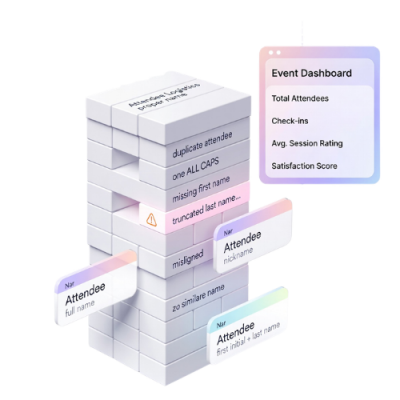
Event data infrastructure visual with integrated dashboards and reporting

Why Manual Reconciliation Doesn’t Scale

Most teams know their data is a mess. So they fix it manually. They export, sort, filter, and compare—often fueled by lukewarm coffee the night before a critical report is due.
 
At a small scale, this is a headache.
 
At a large scale, it’s a guaranteed point of failure.
 
Every duplicate name, nickname variation, or late registration change introduces another crack in the foundation. Over time, reporting becomes less about generating insight and more about damage control. Manual reconciliation works, right up until the moment it doesn’t—usually the night before a meeting.

From Data Cleanup to Data Governance

High-performing event organizations don’t treat reporting as a cleanup exercise. They treat data as infrastructure. This means defining what will be measured before registration opens, aligning all data sources to a single reporting structure, and establishing a consistent attendee identifier across every system.
 
When this is in place, teams stop asking, “Which number is right?” and start asking, “What does the data tell us?”
 
This shift from reactive cleanup to proactive governance is what separates a logistics-driven event from a strategy-driven one. It’s the difference between explaining what went wrong and explaining what you’ll do next.

The Competitive Advantage of Data-Ready Events

Organizations with integrated event data don’t just have cleaner reports. They have a competitive advantage. They can:
  • Reduce budget variance by forecasting with precision.
  • Deliver faster, more credible executive reporting.
  • Strengthen sponsor retention with performance metrics that stand up to scrutiny.
  • Improve the attendee experience by making real-time, data-driven decisions on-site.
In other words, they walk into post-event reviews with answers, not explanations.
Strategic meeting management overview showing connected event data systems

Where Most Teams Get Stuck

The challenge isn’t knowing that data matters.
It’s building a model that works across registration, housing, attendance, and engagement without creating more manual work.

That requires planning data architecture at the same time as the event itself — not after.

If your event reporting still depends on last-minute spreadsheet heroics, you’re not alone. But at scale, that approach limits what your event can prove—and what it can become. Integrated data doesn’t just improve reporting; it enables better decisions, stronger ROI, and more strategic programs. It’s time to stop being the person who has to find the right number and start being the person who knows what the numbers mean.

Leave a Reply

Your email address will not be published. Required fields are marked *

Post comment

Event Services
Why Your Annual Meeting Needs Strategic Meeting Management

Conflicting event data can slow decision‑making and undermine reporting. Strategic meeting management transforms fragmented information into a reliable asset, helping organizations move from reactive cleanup to proactive governance. With data‑ready events, teams gain clarity, credibility, and a competitive edge.

Read More »